
 0512-65655016
Understanding of Service Shares, Cash Shares and Stock Options Under the Shared Equity System
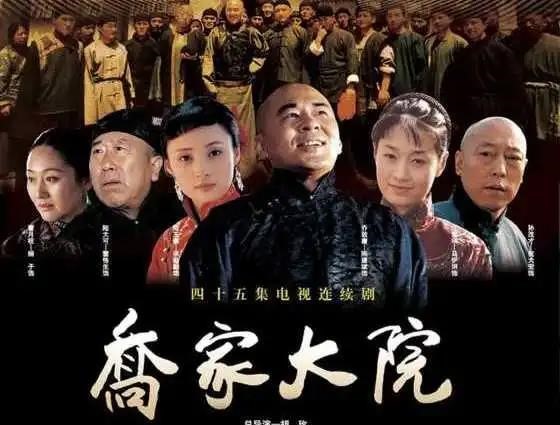
The widely popular TV drama *The Qiao Family Compound*, broadcast on China Central Television, depicts the life journey of Qiao Zhiyong, a towering representative of Shanxi merchants in the late Qing Dynasty. He strove to enrich the people and strengthen the nation through business operations, embodying the humanistic spirit of Shanxi merchants: diligence and frugality, integrity and rationality, as well as adept management capabilities.
The Qiao family’s commercial venture was founded by its first-generation ancestor Qiao Guifa. Under the management of the third-generation heir Qiao Zhiyong, the business achieved tremendous leaps forward. The Fuhao Stores first dominated the commercial landscape of Baotou, followed by two renowned draft banks—Da De Heng and Da De Tong—which operated across major cities nationwide. Ultimately, the Qiao Group realized its grand visions: *trading goods all over the world* and *remitting funds across the entire nation*.
We can uncover the secrets behind their remarkable success through this drama. Their winning strategies encompassed an ethical philosophy prioritizing righteousness, credibility and benefit; the separation of ownership and management via the shop steward accountability system; stringent internal regulations and an apprenticeship system; plus incentive mechanisms embedded in profit sharing. At the heart of all these approaches lay the incentive system, which was chiefly embodied in the **service share system (Shen Gu)**.
Now let us learn about and interpret them together.:Service Shares, Cash Shares and Stock Options under the Shared Equity System.
Let us also look forward to the successful implementation of the equity reform journey at Wisetech.
01 Service Shares
The concept of service shares originated from Shanxi merchants centuries ago, and it is also sometimes referred to as "personal service shares". Service shares are shares conditionally granted by investors to key core employees.Holders of service shares enjoy dividend rights, but are not entitled to inheritance, transfer or voting rights. They can receive dividends from profits without bearing operational losses, and no capital contribution is required to obtain such shares.
Qualifications for Service Shares among Shanxi Merchants:After being recruited as an apprentice by the firm, a clerk had to complete the apprenticeship period, the post-apprenticeship probation period, and three annual accounting cycles. If he worked diligently without committing any serious misconduct, the shop steward would recommend him to the firm owners. Once approved by all shareholders, he would qualify for service shares and be eligible to share in profits at the end of each accounting cycle.
A clerk’s service share started at one or two li, and could be raised gradually. Every increment of service shares would be recorded in the Golden Ledger (Wanjin Zhang). Those who reached seven or eight li of service shares stood a good chance of being promoted to Third Steward or Second Steward, marking a brilliant career breakthrough.
Hence a popular proverb prevailed across the Qi County, Pingyao and Taigu region:Even becoming a cabinet minister is not as good as being a senior staff member at a tea or draft bank.It fully demonstrates how immensely appealing the service share system was in that era.
Dividend Distribution of Service Shares for Shanxi Merchants:After annual financial settlement, the head office of Shanxi draft banks would allocate a certain sum as a loss reserve fund to the managers of each branch based on net profits; this fund was known as ”Huahong (Performance Bonus)“. Dividends were distributed upon the closing of each accounting cycle (normally three to five years per cycle), with Huahong set aside prior to all other payouts. Historical records show that the highest dividend for one unit of service share per accounting cycle exceeded 10,000 taels of silver. Second and Third Stewards at local branches could receive 5,000 to 6,000 taels each cycle. By comparison, a county magistrate of the seventh official rank earned less than 5,000 taels in total over four years, inclusive of his official integrity allowance.
Such generous dividend benefits made stewards and clerks regard the firm as their own undertaking, fostering a highly effective mechanism for self-management and self-discipline. As a result, Shanxi merchants gained an overwhelming dominant position in the draft bank and money exchange industry. All other merchant groups could only marvel at the achievements of Shanxi merchants with admiration.
02 Cash Shares
The concept of cash shares also originated from Shanxi merchants centuries ago, referring to the equity held by capital contributors. Holders of cash shares are entitled not only to dividend rights, but also to the corresponding rights of transfer, inheritance and voting. Owners of cash shares exercise overall control over the enterprise, and their shares are basically equivalent to the registered equity in modern industrial and commercial registration.
When scaled enterprises encounter succession issues (i.e., the transfer of business ownership from the founding generation to the next), they usually allocate a portion of cash shares to professional managers or core technical specialists, so as to safeguard the enterprise’s core competitiveness and sustainable operation.
03 Stock Options
The concept of stock options originated in the West and represents a right of choice. This right entitles investors to buy or sell a certain quantity of a specific underlying asset from the option seller at a pre-agreed price (known as the strike price) at any time within a specified period, regardless of price fluctuations of the underlying asset during this timeframe. An option contract stipulates key terms including the validity period, strike price, trading volume and asset category.
Example: Prior to going public, some listed companies grant equity options to their core internal employees at a relatively low strike price. They typically set a vesting period of five years after the company’s IPO before employees are permitted to exercise their options to purchase or sell shares. Employees may then decide whether to exercise the options based on the prevailing stock price at that time. Evidently, if the company’s stock price rises above the predetermined exercise price under the option grant, employees can exercise the options to acquire shares, and earn profits by purchasing stocks at the agreed price and reselling them at the market price.
04 Wisetech’s Equity Reform Journey
Drawing wisdom from ancient predecessors to reflect on our current corporate operation, deciding whether to share equity, how much equity to allocate and the proper allocation method constitutes profound expertise. Above all, investors holding cash shares must possess the vision and magnanimity to carry out equity reform: prioritize employees’ interests before their own.
Our service share reform (Profit Center General Manager System) launched at Wisetech last May is by no means a hasty, arbitrary adjustment made on a whim by the company’s leadership. General Manager Zhai formally studied under Mr. Guo Fansheng from Huicong Academy and attended the 82nd special training session on equity reform. For 37 years, Mr. Guo Fansheng has dedicated himself to researching the shared equity incentive theory; over the subsequent 26 years, he put this theory into corporate management practice. He expanded Huicong Group from a small street-side shop into an overseas listed enterprise. Furthermore, he has coached countless private enterprises to double their profits via equity reform and achieve successful IPOs, all relying on the shared equity incentive system he summarized and refined from the service share system of Shanxi merchants. Taking "spreading equity reform nationwide" as his mission, he adheres firmly to the philosophy *Land for tillers, equity for businessmen", committing himself to helping numerous private enterprises fulfill the vision of enriching employees and strengthening corporations.
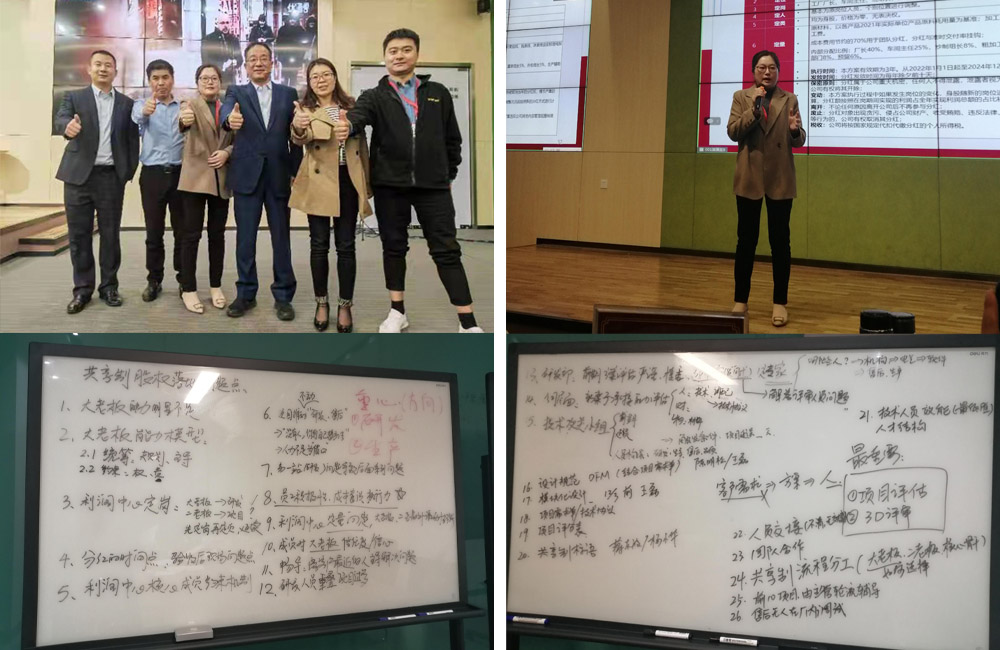
The decision to launch equity reform rests with the company’s leaders, yet whether the reform delivers satisfying results is judged by all employees. From November 21 to 25, 2021, General Manager Zhai arranged the management team covering finance, R&D, project management, after-sales service and human resources to travel to Guangzhou for the 85th Equity Incentive Training Program hosted by Huicong Academy. This move fully demonstrated the company’s firm determination and execution to push forward the service share reform centered on the principles: customer-oriented management, equity distribution for strivers, and dividend sharing based on labor value. On the evenings of November 29 and 30 shortly afterwards, General Manager Zhai led the management team in in-depth self-examination and reflection on a series of issues, including difficulties in implementing equity incentives, as well as drawbacks within the company’s incentive and management systems. We never evade existing problems nor cover up mistakes. No matter how mature an enterprise grows, challenges and conflicts will always persist amid constant external changes; matters that were unproblematic before may turn into obstacles today. What truly matters is our attitude toward problems and continuous efforts to resolve them. Self-criticism serves as an effective way to face ourselves honestly.
The strong pass was once impassable as iron; now we stride forward anew. We firmly believe that with the powerful incentive mechanism of shared equity reform and the united efforts of all staff, all current difficulties will be smoothly resolved. We will surely draw closer to our aspiration of enriching employees and building a thriving enterprise.
Human Resources Department
Suzhou Wisetech Automation Technology Co., Ltd.
Compiled and Reported on December 1, 2021